
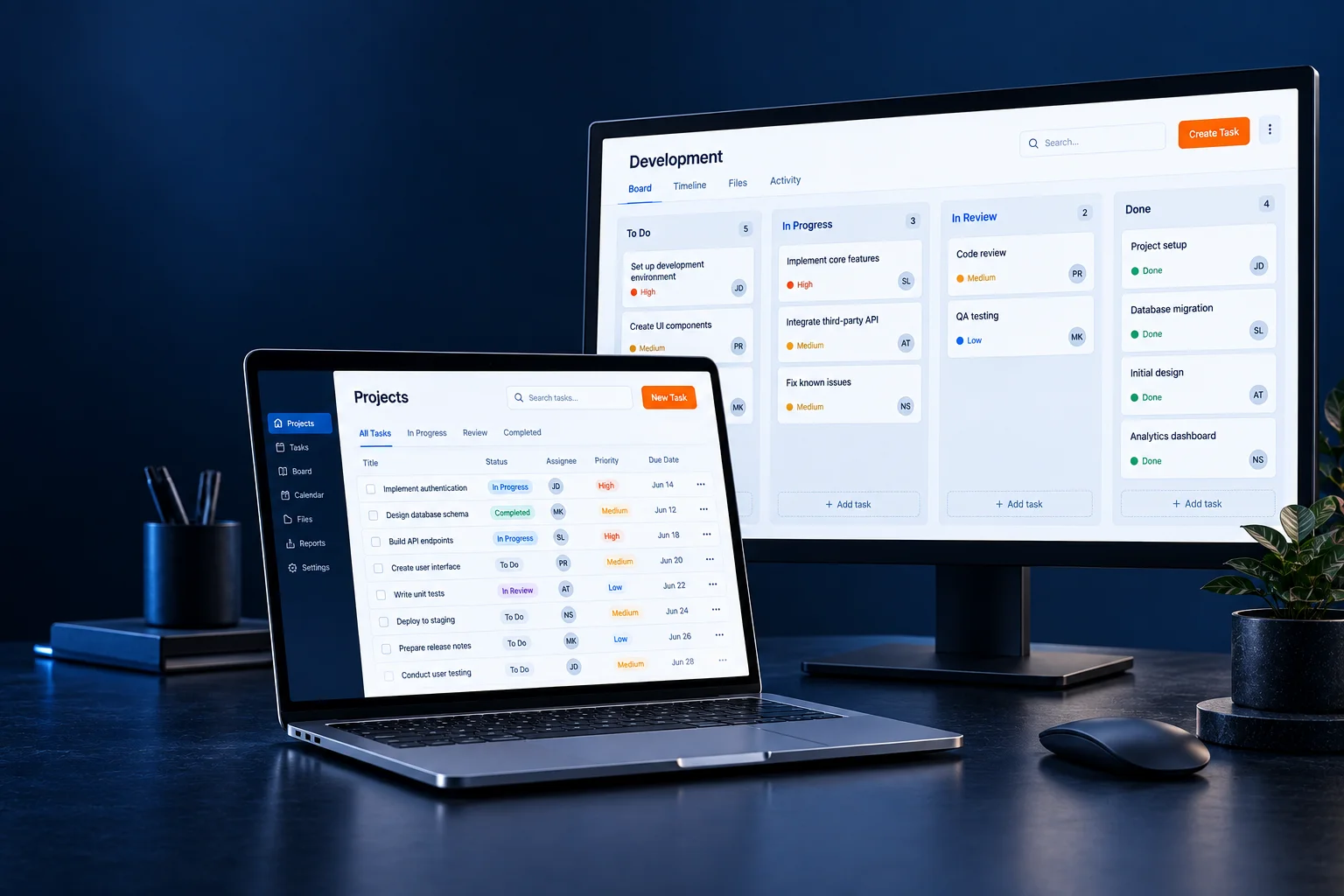
Identify the workflow before choosing technology
Describe the current process, who performs each step, what information moves between people and where delays or errors occur. Separate a recurring operational problem from a one-time inconvenience.
A process map, sample forms and a short list of measurable outcomes give a development team a stronger basis for recommending software than a feature list alone.
Compare delivery partners on evidence
Ask to see relevant work and learn what the team personally delivered. Discuss how it handles discovery, architecture, testing, accessibility, security, deployment and documentation.
A clear proposal should identify milestones, review responsibilities, assumptions, integrations, acceptance criteria and the people who will maintain the system. Ask how changes are estimated after work begins.
Keep ownership and support explicit
Confirm who owns the source code, data, domains, cloud accounts, design files and credentials. Plan backups, access controls, incident response, update responsibilities and a handover before launch.
A system can be built remotely, but support arrangements should still be concrete: named responsibilities, communication channels, service expectations and escalation steps.
Start with a useful first release
Build the smallest complete workflow that can be tested in day-to-day work. A focused release makes it easier to validate assumptions and adapt before investing in secondary modules.
Use real users to review prototypes and trial the finished workflow. Track whether the software reduces the targeted delays or errors, then decide what to improve next.